A straight shot to the summit of Colorado's most iconic Fourteener
Other trail races within 36 miles


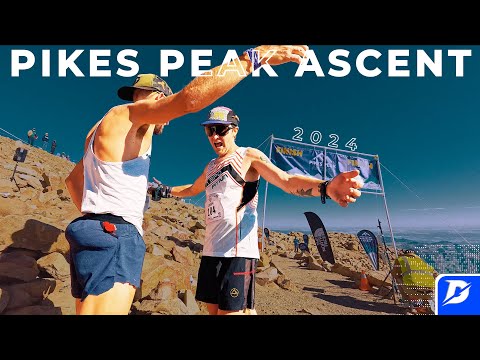
The Pikes Peak Ascent is a 13.3-mile mountain race that climbs 7,815 feet from downtown Manitou Springs to the 14,115-foot summit of Pikes Peak on the historic Barr Trail. Despite covering roughly half-marathon distance, the sustained 11% average grade, significant altitude effects, and rapidly changing mountain weather make this one of the most demanding shorter races in North America. The course winds through pine and aspen forests, breaks above treeline at the A-Frame shelter, and finishes at the Cog Railway terminal atop Pikes Peak — known as America's Mountain for inspiring the lyrics to America the Beautiful.
Experienced ultrarunners
Manitou Springs, CO, United StatesSeptember 18, 2027
Pikes Peak Ascent is a point-to-point trail race in Manitou Springs, CO, United States, held on September 18, 2027. The course covers 13.3 miles, climbs 7,820 ft, and has a 6h30m cutoff.

| Location | Mile | Elevation | Cutoff |
|---|---|---|---|
Start Start | 0.0 | 6,322 ft | — |
Top of W's Aid Station | 3.1 | 7,530 ft | — |
No Name Creek Aid Station | 4.3 | 8,596 ft | 1h40m |
Bob's Road Aid Station | 5.3 | 9,117 ft | — |
Barr Camp Aid Station | 7.6 | 10,066 ft | 3h |
A-Frame Aid Station | 10.2 | 11,827 ft | 4h30m |
Cirque Aid Station | 11.9 | 13,356 ft | — |
Finish Finish | 13.3 | 13,934 ft | 6h30m |
Aid station details for this race are still being filled in. Cutoffs and access rules come from the race’s own published information and can change — check the official race details before planning around them.
Sign in for race-day weather at every station, points of interest, segment-by-segment analysis, pacing, and to save this race to your calendar.
No on-site camping at the race venue. Manitou Springs and neighboring Colorado Springs offer a variety of lodging options. Runners arriving early to acclimatize will find excellent trails and parks nearby.
Pikes Peak weather is notoriously unpredictable. September mornings at the Manitou Springs start (6,300 ft) are typically 60-70°F, while the 14,115-ft summit averages 35-55°F by mid-morning — a 50°F swing before accounting for wind chill. Afternoon thunderstorms with lightning are common above treeline, and conditions can change within minutes. Snow is possible at the summit; in 2024 the Marathon was shortened due to snow and ice. Humidity is typically very low (under 15% at elevation).
The final 3+ miles are above 12,000 ft, finishing at 14,115 ft. Altitude effects (fatigue, nausea, reduced oxygen) intensify significantly above 10,000 ft.
Afternoon thunderstorms with lightning are common on exposed ridgelines above treeline in September. Race committee communicates with Search and Rescue on live weather data and may turn runners back.
Summit temperatures average 35-55°F by 10am before wind chill. Mandatory jacket required; additional warm layers are strongly recommended.
Light snow at or near the summit is possible in September. In 2024, the Marathon was shortened due to snow and ice on the upper mountain.
Temperature swings of 50°F between start and summit are common. Weather can change dramatically within minutes above treeline.
No recommended gear specified
No reviews for this event yet. Be the first to share your experience!
