The original American 200-miler, straight through the Mt. St. Helens blast zone
Other trail races within 90 miles


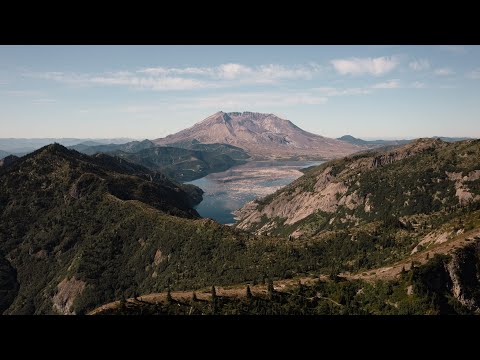
The Bigfoot 200 Endurance Run is the first 200+ mile point-to-point ultramarathon in the United States, covering roughly 200 miles through the Cascade Mountains of Washington from Marble Mountain Sno-Park to White Pass High School in Randle. Runners traverse the eerie volcanic blast zone of Mount St. Helens — with barren lava fields and boulder scrambles — before moving into dense old-growth forests, exposed ridge lines with views of Mount Adams and Mount Rainier, and multiple mandatory river crossings. With 12 full aid stations (including 6 sleep stations), HAM radio coverage, and live SPOT tracking, the event emphasizes runner safety and self-sufficiency across what is widely considered one of the most technically and mentally demanding ultras in North America.
Recommended for seasoned ultrarunners
Randle, WA, United StatesAugust 14, 2026
Bigfoot 200 Endurance Run is a point-to-point trail race in Randle, WA, United States, held on August 14, 2026. The course covers 200 miles, climbs 44,080 ft, and has a 107h cutoff.

| Location | Mile | Elevation | Cutoff | Crew | Pacers | Drop bags |
|---|---|---|---|---|---|---|
Marble Mountain Start | 0.0 | 2,717 ft | — | |||
Blue Lake Aid Station | 12.2 | 3,176 ft | 5h30m5:30 PM | Drop Bags | ||
Coldwater Lake Aid Station | 37.4 | 2,579 ft | 22h10:00 AM +1 | Drop Bags | ||
Norway Pass Aid Station | 56.1 | 3,668 ft | 32h8:00 PM +1 | Crew | Pacers | Drop Bags |
Elk Pass Aid Station | 67.2 | 4,081 ft | 37h30m1:30 AM +2 | Crew | Pacers | Drop Bags |
RD 9327 Aid Station | 82.2 | 3,563 ft | 45h30m9:30 AM +2 | Crew | Pacers | Drop Bags |
Spencer Butte Aid Station | 93.4 | 3,517 ft | 52h4:00 PM +2 | Drop Bags | ||
Lewis River Aid Station | 101.0 | 2,001 ft | 56h8:00 PM +2 | Drop Bags | ||
Quartz Ridge Aid Station | 118.2 | 4,639 ft | 65h30m5:30 AM +3 | Crew | Pacers | Drop Bags |
Chain of Lakes Aid Station | 134.4 | 4,383 ft | 73h1:00 PM +3 | Drop Bags | ||
Klickitat Aid Station | 151.7 | 4,459 ft | 82h30m10:30 PM +3 | Crew | Pacers | Drop Bags |
Twin Sisters Aid Station | 171.1 | 4,252 ft | 93h30m9:30 AM +4 | Drop Bags | ||
Owens Creek Aid Station | 187.1 | 2,247 ft | 101h30m5:30 PM +4 | Crew | Pacers | Drop Bags |
Finish Finish | 200.0 | 909 ft | 107h11:00 PM +4 | Crew | Pacers | Drop Bags |
Aid station details for this race are still being filled in. Cutoffs and access rules come from the race’s own published information and can change — check the official race details before planning around them.
Sign in for race-day weather at every station, points of interest, segment-by-segment analysis, pacing, and to save this race to your calendar.
Free overnight parking and car camping available at the Marble Mountain Sno-Park (race start, near Cougar, WA) and at the finish/HQ at White Pass High School in Randle, WA.
August in the Cascade Mountains brings highly variable conditions across the 200-mile course. The exposed volcanic blast zone of Mount St. Helens can see temperatures above 90°F under summer sun, while upper-elevation ridgelines bring cold rain, fog, and occasionally snow overnight. Runners should expect a range from near-freezing at night on high passes to uncomfortably warm midday in the lowland sections. Temperatures as low as 7°F have been recorded historically. Pacific Northwest moisture keeps trails wet and streams running at variable levels. Afternoon thunderstorms are possible on exposed ridges, and high winds can occur above treeline.
The Mt. St. Helens blast zone is fully exposed with little shade; summer daytime temperatures can exceed 90°F in this section
Nighttime temperatures can drop below freezing at higher elevations; temperatures as low as 7°F (-14°C) have been recorded on the course
Cascade Mountains can shift rapidly from summer heat at lower elevations to heavy rain, strong winds, and snow at higher elevations — sometimes within the same day
Pacific Northwest weather brings frequent rain at mid and high elevations; course features muddy sections and variable stream crossings
No reviews for this event yet. Be the first to share your experience!
